
What Is SEO? A Complete Beginner’s Guide
If you have ever searched for a product, service, or answer on Google, you have seen search engine optimization (SEO) in action. But What Is SEO, and why does it matter for a website? SEO is the process of improving a website so that search engines can understand its content and show it to people searching for relevant information. This beginner-friendly guide explains the basics and how you can get started.
What Is SEO?
SEO stands for Search Engine Optimization. It includes strategies that help a website appear more prominently in unpaid, or organic, search results. Unlike paid advertising, SEO does not require you to pay for every click. Instead, it focuses on making your website useful, relevant, accessible, and trustworthy.
The goal is not simply to attract more visitors. Good SEO brings people who are genuinely interested in your content, products, or services. For example, a local business may want to appear when potential customers search for services in its area.
How Does SEO Work?
Search engines such as Google use automated systems to discover pages, understand their content, and decide which pages may best answer a search. When learning What Is SEO, understanding these three stages is essential:
Crawling: Search engines discover pages by following links and using sitemaps.
Indexing: They analyze and store information about discovered pages.
Ranking: When someone searches, algorithms select and order relevant results.
You cannot guarantee a specific ranking, but you can make your website easier for search engines to access and understand.
Why Is SEO Important?
SEO can help your website attract consistent, relevant traffic over time. It can improve visibility, build credibility, and help potential customers discover your business while researching a need. It also supports a better user experience when you create clear content, improve page speed, and make your site easy to navigate.
SEO is a long-term process. Results may take weeks or months, depending on competition, website quality, and the work involved.
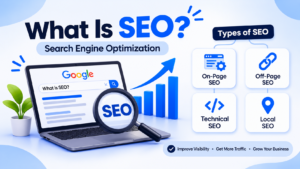
Main Types of SEO
On-page SEO :
Optimizing page titles, headings, content, images, internal links, and URLs so that visitors and search engines understand each page.
Off-page SEO:
Building your website’s reputation through relevant mentions, genuine backlinks, and other signals beyond your own website.
Technical SEO:
Improving the technical foundation of your site, including mobile usability, site speed, crawlability, indexing, and secure connections.
Local SEO:
Helping businesses become visible in location-based searches, such as searches for services near a town or city.
How to Start SEO as a Beginner
Begin by understanding your audience and the questions they search for. Use keyword research to identify relevant search terms, then create helpful content that answers those questions naturally. Give each page a clear title, use headings to organize information, and add descriptive image alt text.
Make sure your website works well on mobile devices and loads efficiently. Link related pages together so visitors can find useful information. Set up Google Search Console to monitor indexing, impressions, clicks, and search queries. Review the data regularly and improve pages where needed.
Avoid keyword stuffing, copied content, misleading links, and promises of guaranteed rankings. Focus on people first and use keywords naturally.
Summary
Understanding What Is SEO is the first step toward improving your website’s content, usability, and online visibility. Start with useful content, sound technical basics, and consistent improvement rather than expecting instant results.
For more digital marketing insights and professional services, visit digital marketing strategist in Kannur.